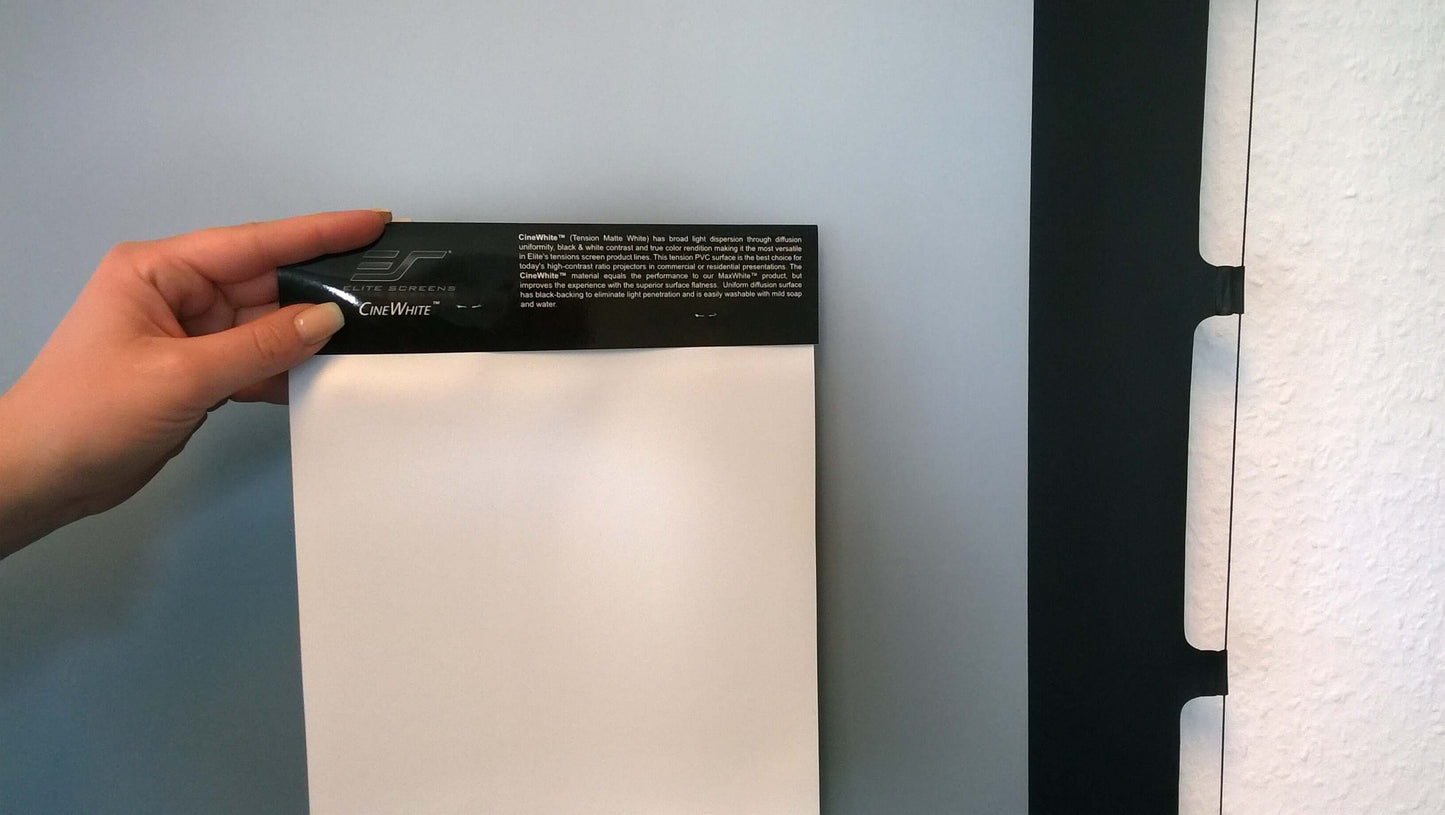
• CineGrey 3D - Screen Material Sample (DIN A4)
  • CineGrey 3D - Screen Material Sample (DIN A4)
  • CineGrey 3D - Screen Material Sample (DIN A4)

Over 1 million satisfied customers globally.

CineGrey 3D - Screen Material Sample (DIN A4)

CineGrey 3D - Screen Material Sample (DIN A4)

SCREEN MATERIAL: ZCG3D

Not sure about the screen material?

Watch this video

Wie finde ich das richtige Material für Beamer-Leinwände?

Um das richtige Projektionsleinwandmaterial auszuwählen, müssen Sie die Grundlagen von Projektoren verstehen.( **Ultra-Short-Throw**, **Standard** und **Short Throw** Projektoren) verstehen sowie deren Kompatibilität mit Leinwandmaterialien und wie **Umgebungslicht** Ihre Leinwandwahl beeinflusst:


Ultra-Short-Throw-Projektoren (UST)

- Projektionsabstand: Diese Projektoren stehen sehr nah an der Leinwand, typischerweise weniger als 0,5 Meter (oder 1,5 Fuß).
- Besondere Anforderung: UST-Projektoren benötigen speziell entwickelte Leinwandmaterialien, die Streulicht verhindern und scharfe Bilder ermöglichen, auch wenn aus einer so kurzen Entfernung projiziert wird.
- Beste Leinwandwahl: Suchen Sie nach einer **Umgebungslicht-abweisenden (ALR)** Leinwand, die für UST-Projektoren entwickelt wurde, um die beste Bildqualität zu gewährleisten, insbesondere in Räumen mit heller Beleuchtung.


Standard-Projektoren

- Projektionsabstand: Diese Projektoren sind weiter von der Leinwand entfernt, typischerweise 2,5 bis 4 Meter (oder 8 bis 13 Fuß).
- Vielseitigkeit: Standard-Projektoren funktionieren mit einer Vielzahl von Leinwandmaterialien, da die längere Entfernung eine flexiblere Lichtverteilung ermöglicht.
- Beste Leinwandwahl: Sie können aus verschiedenen Leinwandtypen wählen, abhängig von Ihrer Beleuchtung. Wenn Ihr Raum gedimmt ist, funktioniert eine Standardleinwand in Weiß oder Grau gut. In helleren Räumen sollten Sie dennoch eine ALR-Leinwand in Betracht ziehen, um den Einfluss des Umgebungslichts zu mindern.


Short-Throw-Projektoren

- Projektionsabstand: Diese Projektoren befinden sich näher an der Leinwand als Standard-Projektoren, in der Regel zwischen 0,5 und 2 Meter (oder 1,5 bis 6 Fuß).
- Mittlere Anforderungen: Short-Throw-Projektoren benötigen Materialien, die mit kürzeren Projektionen umgehen können, ohne Hotspots oder Unschärfen zu verursachen.
- Beste Leinwandwahl: Eine spezialisierte **Short-Throw-Leinwand** oder jedes Material, das für Short-Throw-Projektoren optimiert ist, liefert die besten Ergebnisse, besonders wenn es mit einer ALR-Leinwand in Räumen mit hohem Umgebungslicht kombiniert wird.


Umgebungslicht und dessen Einfluss auf die Leinwandwahl

- Helle Räume: Wenn Ihr Raum viel natürliches oder künstliches Licht hat, kann das Umgebungslicht das projizierte Bild auswaschen, wodurch es stumpf oder verblasst wirkt. Leinwände, die **Umgebungslicht abweisen** (ALR), sind in diesem Fall ideal, da sie den Bildkontrast und die Klarheit auch in gut beleuchteten Räumen verbessern.
- Gedimmte oder dunkle Räume: In Räumen mit kontrollierter oder minimaler Beleuchtung funktionieren Standardleinwandmaterialien, wie weiße oder graue Leinwände, perfekt, da das Umgebungslicht keine bedeutende Rolle spielt.

Fazit
Die Wahl der richtigen Leinwand hängt sowohl vom Typ Ihres Projektors als auch von den Lichtverhältnissen im Raum ab. UST-Projektoren benötigen spezialisierte Leinwände, während Standard- und Short-Throw-Projektoren mehr Flexibilität bieten. Für hellere Räume ist eine ALR- oder CLR-Leinwand entscheidend, während in dunkleren Umgebungen eher Standardmaterialien verwendet werden können.

Choosing the right type of projection screens.

To choose the right type of projection screen, you have to understand the fundamentals of projectors ( **Ultra-Short-Throw**, **Standard**, and **Short Throw** projectors), along with their compatibility with screen materials and how **ambient light** affects your screen choice:


Ultra-Short-Throw Projectors (UST)

- Projection distance: These projectors sit very close to the screen, typically less than 0.5 meters (or 1.5 feet).
- Special requirement: UST projectors need specially designed screen materials that prevent light scatter and allow for sharp images, even when projected from such a short distance.
- Best screen choice: Look for an **Ambient Light Rejecting (ALR)** screen designed for UST projectors to ensure the best image quality, especially in rooms with brighter lighting.


Standard Throw Projectors

- Projection distance: These projectors are positioned farther away from the screen, typically 2.5 to 4 meters (or 8 to 13 feet).
- Versatility: Standard throw projectors work with a wide variety of screen materials since the longer distance allows for more flexible light distribution.
- Best screen choice: You can choose from various screen types, depending on your lighting. If your room is dim, a standard white or gray screen will work well. For brighter rooms, you may still want an ALR screen to counter the effects of ambient light.


Short Throw Projectors

- Projection distance: These projectors are placed closer to the screen than standard ones, generally between 0.5 to 2 meters (or 1.5 to 6 feet).
- Moderate requirements: Short throw projectors need materials that handle closer projections without causing hot spots or blurring.
- Best screen choice: A specialized **short throw screen** or any material optimized for short throw projectors will give the best results, especially if paired with an ALR screen for rooms with high ambient light.


Ambient Light and Its Effect on Screen Choice

- Bright rooms: If you have lots of natural or artificial light in your viewing space, ambient light can wash out the projected image, making it look dull or faded. Screens designed to **reject ambient light** (ALR) are ideal in this case, as they enhance image contrast and clarity, even in well-lit rooms.
- Dim or dark rooms: In rooms with controlled or minimal lighting, standard projection materials, like white or gray screens, will work perfectly, as ambient light is not a significant concern.

Conclusion
Choosing the right screen depends on both your projector type and room lighting conditions. UST projectors need specialized screens, while standard and short throw projectors offer more flexibility. For brighter rooms, an ALR or CLR screen is crucial, while darker environments allow for more standard materials.

Regular price €6,00 EUR
Regular price Sale price €6,00 EUR
Sale Sold out
Taxes included. Shipping calculated at checkout.

Available now – at your door in 2–3 business days.

Technical Details The selected model is compatible with:

Technical Data

Product
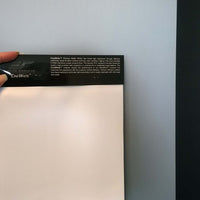
CineGrey 3D - Screen Material Sample (DIN A4)
Variation
ZCG3D
Screen Material
Silver/Gray (PVC Flexible)
Gain
1.2
Suitable For
For Standard-Throw Projectors
Item number
ZCG3D

Product Description

CINEGREY3D - SCREEN MATERIAL SAMPLE (DIN A4)

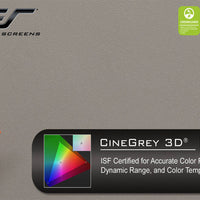
The CineGrey 3D® is a reference quality front projection screen material formulated for environments with minimal control over room lighting.  It was designed to enhance picture brightness, offer accurate color fidelity, and improve contrast levels. The CineGrey 3D® is best for family rooms, educational facilities, conference rooms or any applications in which incident light is a factor.  Typical matte white surfaces wash out the images when ambient light cannot be controlled. The CineGrey 3D® is the best choice for having a projected image with a balanced color temperature and contrast under such conditions.

It provides flat spectral response for an accurate color balance in dark room environments as well for reference quality applications.  The CineGrey 3D® is ready for the next-generation of high-performance video.


Elite Screens Series:

SableFrame, Aeon EDGE FREE® Fixed Frame

Cinegray 3D

Features

  • Material Type Ambient Light Rejecting (ALR/CLR®), Silver & Grey
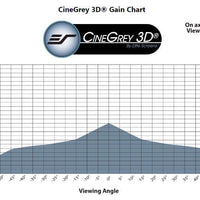
  • Gain: 1.2; Viewing Angle: 90° (45° L/R)
  • ISF Certified for accurate color points, color temperature and dynamic range
  • Angular-Reflective front projection material with ambient light rejecting technology
  • Contrast enhancement over standard matte white surface
  • 4K Ultra HD, Active 3D, and HDR Ready • Polarized for Passive 3D applications
  • Capable of improving brightness, color, and contrast under ambient light conditions
  • Mildew resistant, screen surface can be cleaned with a microfiber cloth and water
  • Accurate color representation – Flat Spectral Response


Lexicon:

Gain=Gain or Gain factor is a measure of the screen reflection performance.

CLR: Ceiling Light Rejection

ALR: Ambient Light Rejection

Acoustic Screens: transparent screen for placing the speakers behind the screen

WraithVeil-Dual: Both-side projection (Projection from the front and the rear side)

CineGrey: CineGrey (Tension High Contrast Grey) is designed to encrease contrast DLP and LCD Home Cinema Projectors. Its superior flatness makes the CineGrey ideal for home theater use. It also helps to reduce ambient light.

UHD= Ultra High Definition is the new standard for high-definition video. Under the term UHD Premium the topic is marketed and is also often referred to as 4K.

 4K: 4K stands for the doubling of Full HD 2K and designated in the marketing long longer the high-definition television and beamer. That's why there are also 4K screens on Elite Screens.

Aktiv 3D = Active 3D involves a single projector rapidly alternating between displaying the left eye image and the right eye image.

Fiberglass: The key difference between the MaxWhite™/MaxWhite™ B and MaxWhite™ FG is that the MaxWhite™ FG has a fiber glass backing.

Kontrast Contrast or Contrast ratio: Measured difference between a (max.) white pixel and a (max.) black pixel on a projection screen.

NFPA = National Fire Protection Association

HDR = High Dynamic Range, a Feature of the new UHD Premium Blu Ray Standard

GREENGUARD: The GREENGUARD Environmental Institute (GEI) has the mission of improving human health and quality of life.

Trigger:  A trigger (trigger) is used to create canvases over i.d. To control a beamer. Almost every modern projector has a trigger output. All motorized Elite Screens screens have a trigger input.

Tension = tension! Tension or Tab Tension Screens have been developed to incorporate the perfect plan position of frame walls in motorized walls.


Produktunterlagen:

Produkteunterlage CineGrey3D MaterialSheet
Close

Documents

Product screens size-Chart and guide

View full details
ZCG3D
Regular price €6,00 EUR
Regular price Sale price €6,00 EUR
Sale Sold out
Taxes included. Shipping calculated at checkout.

Available now – at your door in 2–3 business days.

Specification for your selected item

Product
CineGrey 3D - Screen Material Sample (DIN A4)
Variation
ZCG3D
Screen Material
Silver/Gray (PVC Flexible)
Gain
1.2
Suitable For
For Standard-Throw Projectors
Item number
ZCG3D

Recently Viewed

Why Elite Screens Shop Is the best place to buy

Pay over time, 0% interest

when you choose to check out with Paypal

Enjoy fast delivery & easy pickup

Choose from two-hour pickup from Elite screen or safe delivery to you door.²

Buy directly from manufacturer

Enjoy a 2-Year Manufacturer’s Warranty

Special Offer for the current customers.

Get an excellent customer support.

Shop with the help of a Specialist.

Let us guide you over the phone or via E-Mail and answer all of your questions.

*Based on the compatibility of the variation. For more information, please refer to the technical details of the selected variation.